Low-consideration, high-volume selling
Low-value impulse purchases have different content needs and economics. We are not offering a standard launch for this buying journey while we prove the consultative-sales model.
Our first market
A consultative sale is a considered purchase where a buyer needs answers about fit, cost, or timing before committing.
A roof replacement, a dental implant, a collision repair, a legal matter, a $12,000 hot tub. The buyer reads for days or weeks, forms an opinion nobody corrects, and either books or quietly disappears. Almost all of that happens before anyone at the business knows they exist.
The test
Our ambition is good marketing for every business. Consultative sales is where we are proving the loop first: clear buyer needs, useful content opportunities, and outcomes that can be recorded. These criteria help us assess whether the current service fits your business.
Buyers compare before they call.
Fit, cost, timing, or trust matters.
We also review traffic, close rate, and margin.
Why the leak exists
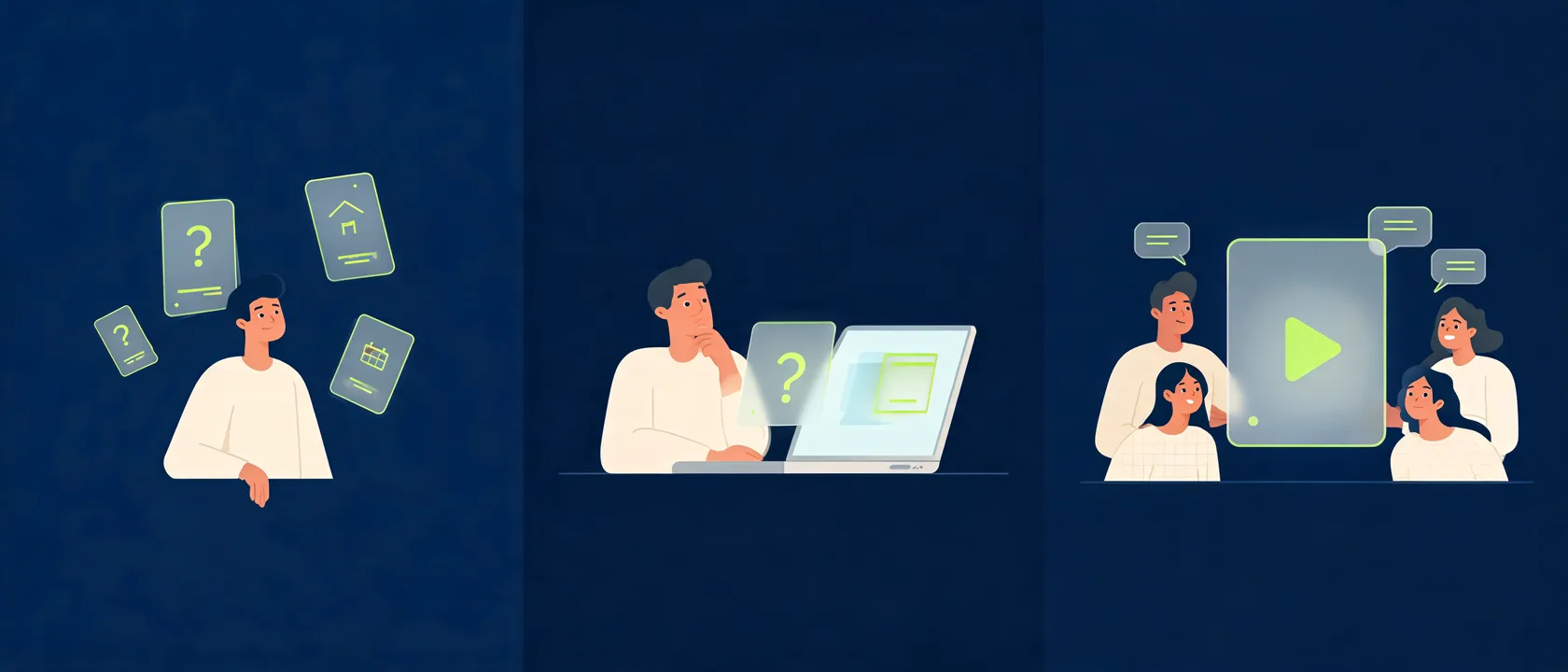
Bring the clues together.
Find what buyers need.
Give useful answers an audience.
Where it shows up
These industries look unrelated and behave identically. The buyer researches alone, the questions are specific, and the customer is worth real money.

Some of these close over the phone, some close in a showroom, and a few close online without anyone speaking to a human. The buying behaviour is the same in all of them, which is why one system serves all of them.
Current scope
Our first launch focus gives us a clear place to learn and prove the model before expanding. It does not define the limit of the vision.
Low-value impulse purchases have different content needs and economics. We are not offering a standard launch for this buying journey while we prove the consultative-sales model.
Enterprise procurement, security reviews, and long buying committees need a different sales process. Our current managed service focuses on buyers researching a service or considered purchase before contacting the business.
Start with three free short video ideas from your public website. Explore the buyer questions behind them, then review your conversion opportunity and launch fit with our team.
We use necessary storage for the site. Accept all confirms you are 18 or older and turns on optional tools. Where the live assistant is already available, opening or using it is treated the same as that consent for assistant processing (see Privacy Policy / Terms); the microphone is only requested if you start a voice session. Prefer not to attest your age or use the assistant? Use Reject optional or Customize.